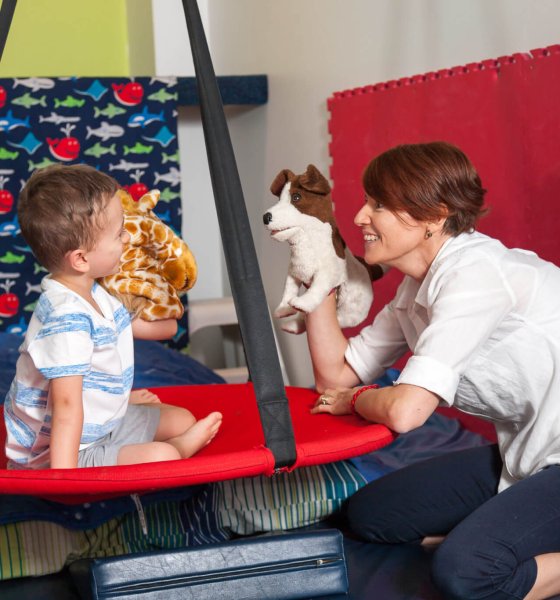
Helping children build the skills they need to learn, communicate and thrive.
Are you concerned that your child isn’t reaching developmental milestones as expected? Perhaps they’re delayed in more than one area — communication, play, feeding, social interaction, learning, emotional regulation or independence.
When developmental concerns affect multiple areas, it can feel overwhelming working out what support they need. We provide family-centred support for children with Global Developmental Delay (GDD) across the Central Coast.
Global Developmental Delay (GDD) is a term used when a young child experiences significant delays across two or more areas of development — which may include communication and language, speech, social interaction, play, feeding, fine and gross motor skills, cognitive development, emotional regulation and self-help skills.
Children with GDD learn and develop at their own pace and often benefit from additional support to build foundational skills in the early years. Importantly, every child is unique — a diagnosis does not define your child or determine what they can achieve.
When to seek support
Signs Your Child May Benefit
Every child develops differently, but some signs may indicate that additional support would be beneficial.
Communication & language
Is not talking yet
Uses fewer words than expected
Is difficult to understand
Has difficulty following instructions
Struggles to communicate wants and needs
Appears behind peers in communication
Social & play
Prefers to play alone most of the time
Has difficulty engaging with others
Struggles with turn-taking or shared attention
Finds it difficult to learn through play
Difficulty participating in group activities
Feeding & oral motor
Is a very selective eater
Has feeding difficulties
Difficulty chewing or swallowing
Oral motor challenges
Finds mealtimes stressful
Milestones & regulation
Delayed across multiple developmental areas
Needs additional support learning new skills
Not progressing as expected compared to peers
Frequent emotional outbursts or meltdowns
Finds transitions and change difficult
If you’re unsure whether your child’s development is on track, an assessment can provide clarity, guidance and practical next steps.
Our approach
Supporting the Whole Child
We focus on supporting the whole child rather than a single developmental area.
Child-led and play-based
Family-centred
Neuroaffirming
Strengths-based
Evidence-informed
Individualised to your child’s needs
Rather than focusing only on challenges, we build on your child’s strengths while helping them develop new skills, confidence and independence.
What to expect
Assessment & Therapy
1
Assessment
Helping us understand your child’s unique developmental profile. We may assess:
Communication, language and speech
Play and interaction skills
Feeding and oral motor skills
Social engagement and emotional regulation
Attention, participation and milestones
2
Therapy Sessions
Engaging, meaningful and relevant to everyday life. May focus on:
Communication development
Play and social interaction
Feeding skills
Emotional regulation and participation
Parent coaching and education
Related support
Supporting the Whole Child
Many children with Global Developmental Delay benefit from a combination of services:
Early Intervention Speech Therapy
Supporting babies, toddlers and preschool children during the most important years of development.
Understanding the reasons behind meltdowns, tantrums and routine refusal, with practical strategies that support emotional regulation and communication.
Developmental delay may affect a single area of development. Global Developmental Delay refers to significant delays across two or more developmental areas.
Absolutely. Every child develops at their own pace and, with appropriate support, many children make meaningful gains across multiple developmental areas.
We support babies, toddlers and young children, with a strong focus on early intervention and developmental support.
Get started
Concerned About Your Child’s Development?
You don’t need to have all the answers before reaching out. If your child is experiencing delays across multiple areas of development, early support can make a meaningful difference.