By Leana Matodes, paediatric speech pathologist · RTC Speech Pathology
A thumb is always there. It doesn’t fall out of the cot, it can’t be left at Grandma’s, and it comforts a child in a way nothing else quite does. That is exactly why thumb sucking can be so hard to stop.
In more than thirty years of working with children as a speech pathologist, feeding therapist and orofacial myofunctional therapist, I have learnt that thumb sucking is rarely just about the thumb. Before we help a child stop, we need to understand what the thumb is doing for them. We don’t want to take away a child’s comfort without first helping them find another way to feel safe, calm and connected.
Is thumb sucking normal?
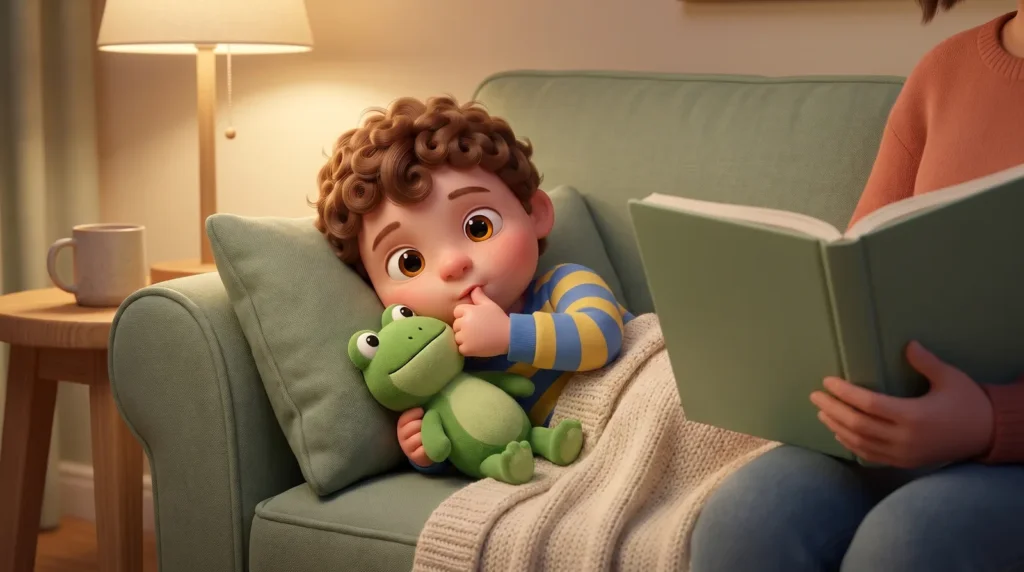
Yes. Babies are born with a strong sucking reflex. They need it for feeding, and it also soothes them. Many babies find their fist, fingers or thumb in the first months, and the thumb becomes a way to settle for sleep, calm down when upset and feel safe in a new place.
Most children gradually outgrow the habit, often between two and four years of age, as they learn other ways to settle. So if your toddler sucks their thumb when they are tired, unwell or snuggling up for a story, there is usually nothing to do yet except notice when it happens.
When should thumb sucking stop?
From around two years, start gently offering your child other ways to comfort themselves. The American Academy of Pediatric Dentistry recommends helping children stop long sucking habits by about three years of age, and it is important to stop before the adult front teeth come through, usually around five to six years.
Age is only part of the picture. Pamela Marshalla, an American speech-language pathologist, explains in her book How to Stop Thumbsucking and Other Oral Habits that three things decide how much a thumb habit affects the mouth:
- how often your child sucks their thumb
- how long each time lasts
- how hard they suck
A child who rests their thumb gently against their lips for a few minutes at bedtime is very different from a child who sucks hard for hours every day and night. Please ask for an assessment if the habit is still going strongly after three, or sooner if your dentist has noticed changes in the teeth or mouth.
How thumb sucking can affect the teeth and the roof of the mouth
A child’s mouth is growing all the time. A thumb that sits in the mouth for many hours a day pushes on the front teeth, the gums and the roof of the mouth, and it holds the tongue down low. Over time this can lead to:
- an open bite, where the front teeth don’t meet when the back teeth bite together. This makes it harder to bite into food, and it changes where the tongue goes when your child swallows and talks.
- top front teeth that tip forward, which are also more likely to be knocked and injured
- a narrow upper jaw and a high roof of the mouth, sometimes with a crossbite, where the top and bottom back teeth don’t fit together properly
- a tongue that rests low and forward, instead of up against the roof of the mouth
- an open mouth at rest, and lips that find it hard to stay closed
Not every child who sucks their thumb will have these changes. It depends on how the child is growing and on how often, how long and how hard they suck. Some changes settle on their own once the habit stops early. Others need a dentist or orthodontist.
How thumb sucking can affect speech
Thumb sucking doesn’t automatically cause speech difficulties. Clear speech, though, needs the tongue, lips and jaw to work together with good timing, and a thumb can change all three. If the tongue has learnt to rest forward, or the front teeth no longer meet, some sounds become harder:
- s and z, often with a lisp, where the tongue pokes forward between the teeth
- sh and ch, which need careful tongue placement and a steady stream of air
- t, d, n and l, when the tongue tip lands in the wrong place
Not every lisp comes from thumb sucking, so speech sounds always need their own assessment. At RTC we look at speech, tongue posture, the teeth and any oral habits together, to find out what is really going on.
Why some children find it so hard to stop
For many children, the thumb is not just a habit. It has become their way of managing their feelings. Children often reach for it when they are:
- tired or getting ready for sleep
- worried, unsure or in a new situation
- overwhelmed by noise, people or busyness
- bored, eg in the car or in front of the television
- upset, frustrated or cross
- needing comfort or closeness
Over time, the brain links sucking with feeling calm. If we simply tell a child to stop, we take away a coping tool without giving them another one, and many children will understandably hold on tighter. So the goal is not only to stop the sucking. It is to find out what the thumb is giving your child, and help them get that comfort in a new way.
First, notice when it happens
For a week, simply notice when the thumb goes in. Most children suck their thumb at the same times every day. Ask yourself what it seems to be doing for your child at those times:
- Comfort: when they are tired, upset, worried or missing you
- Sensory input: when they need something to do with their mouth or hands, or when everything around them feels too much
- Boredom: in the car, in front of a screen, waiting
Once you know the pattern and the need behind it, you know where to start, and which kind of substitute is most likely to help.
How I use Theraplay to help
I am trained in Theraplay, an approach built on playful, warm connection between a child and the adults who care for them, and I use it every day in my clinic. It helps children feel safe, valued and capable, and that is exactly what a child needs when they are letting go of an old comfort. Theraplay works with four ideas, and each one helps with thumb sucking.
- Structure: helping your child feel safe. Children feel calmer when they know what comes next. A predictable bedtime routine and a simple plan for “what we do instead of the thumb” give your child something solid to hold on to.
- Engagement: building connection. Shared play, songs, laughter and movement with you are powerful regulators. These moments of connection can become a new source of comfort.
- Nurture: meeting the need for comfort. Cuddles, a gentle hand massage, a calming song or quiet time together. We are not taking comfort away. We are offering it in a new way.
- Challenge: building confidence. Small, achievable goals, eg settling for a story without the thumb, let your child feel the success of doing something new. Praise the effort, not only the result.
Underneath all of this is your child’s sense of self. Children need to know that they are loved, capable and accepted, whether or not their thumb is in their mouth. A child who feels secure and proud of what they can do is far more willing to try a new way of calming down.
Finding a substitute that works
The best substitute meets the same need the thumb was meeting. A child who sucks for comfort needs comfort. A child who sucks for something to do with their mouth needs oral input.
- Comfort and connection: cuddles, a favourite soft toy, a bedtime story, quiet one-to-one time with you
- Busy hands: a squeeze ball, playdough, drawing, building blocks or a small comfort object to hold
- Calming movement: gentle rocking, swinging, rhythmic bouncing or a slow stretch together
- Feelings and breathing: naming feelings together, and child-friendly breathing games, eg smelling the flower and blowing out the candle
- Something for the mouth: a chewing activity chosen for your child, eg crunchy foods at snack time or a MyoMunchee (see below)
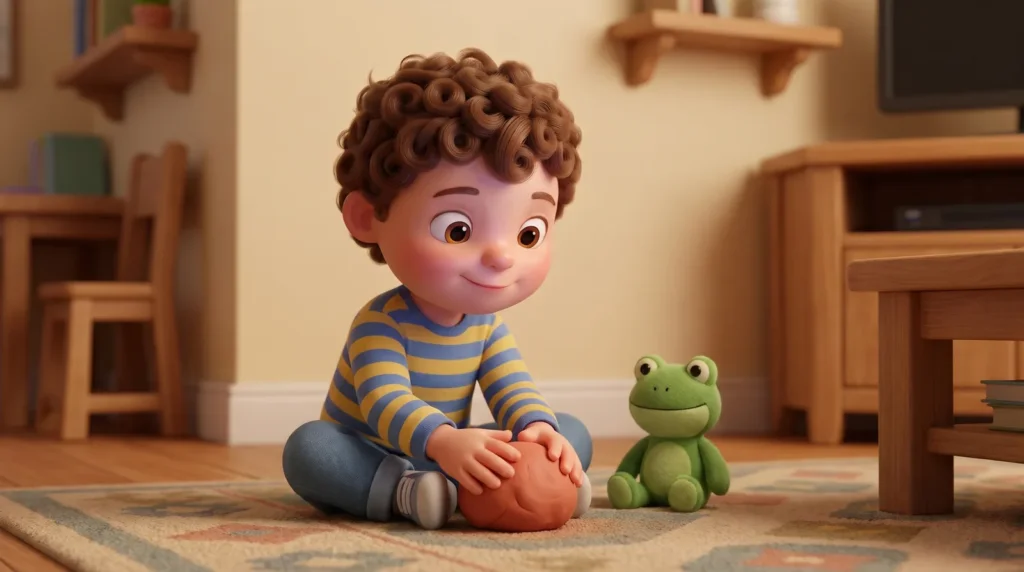
Whatever you choose, it should be safe for your child’s age and shouldn’t simply become a new all-day habit.
The MyoMunchee
The MyoMunchee is a soft, flexible chewing device that may be part of your child’s programme after an assessment, especially for children who need oral input. Instead of the sucking pattern, it gives your child a chewing pattern, and chewing is much better for the mouth. It helps to:
- build strength in the jaw muscles and lips
- encourage lip closure and good oral muscle tone
- give the mouth purposeful, rhythmic input
- make your child more aware of their lips, tongue and jaw
If it suits your child, from about two years they can use it with you at set times, eg while winding down before sleep or during a quiet story, at the moments they would usually reach for their thumb. Take it out once your child has drifted off, rather than leaving it in overnight. It works best as one part of a plan that also looks after your child’s feelings. It is not a universal substitute for thumb sucking or a replacement for an assessment: whether it suits your child depends on their age, oral-motor skills, dental development and safety. Its benefits for the teeth and jaw are still being researched.
Helping your child stop
There is no single trick for how to stop thumb sucking. What works is a plan you make together with your child, one small step at a time.
- Talk about it together. Explain, in simple words, that their thumb is pushing on their teeth and that big kids’ teeth need room to grow. Let them decide, with you, that they would like to stop. A child who has chosen to stop does far better than one who has been told to.
- Start with one time of day. Daytime is usually easiest.
- Offer the substitute before the thumb goes in. If you know your child reaches for their thumb in the car, have the squeeze ball or the song ready as you buckle them in.
- Praise a lot. Notice and praise the times their thumb stays out, rather than the times it goes in.
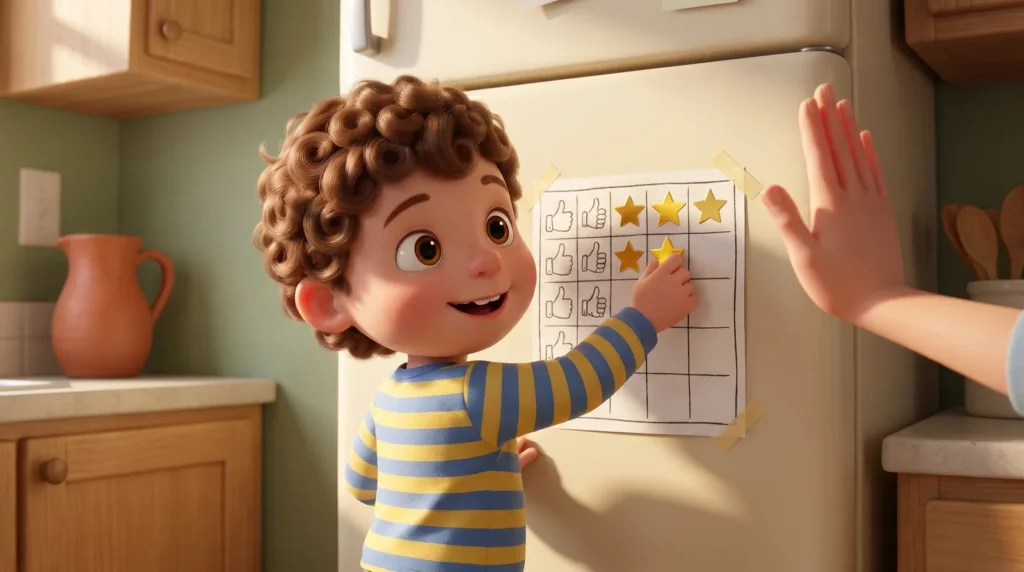
- Use a sticker chart. One sticker for each thumb-free car trip, story or nap, with a small reward after a few days. Let your child choose the reward.
- Agree on a secret signal. A gentle touch on the shoulder or a special word reminds your child without anyone else noticing.
- Leave bedtime until last, and make it nurturing. Keep the same calm routine every night, with a cuddle, a song and a story, and let your child hold a favourite soft toy. From about two, the MyoMunchee can be part of winding down. If the thumb goes in once your child is asleep, leave it be.
Expect it to take a few weeks. There will be good days and harder days, especially when your child is tired or unwell. That is perfectly normal.
What not to do
- Don’t shame, tease or punish. Thumb sucking is a comfort habit, and stress makes children reach for comfort more often.
- Don’t keep pulling the thumb out of their mouth. It adds to the upset and makes the thumb more precious, not less.
- Don’t use bitter nail paint, gloves or anything that forces the thumb out. It turns a comfort habit into a fight.
- Don’t start during a big change, eg a new baby, a move, starting childcare or school. Wait until things have settled.
- Don’t swap the thumb for a dummy in an older child. That is one sucking habit for another.
How myofunctional therapy helps
Even once the thumb has gone, the mouth often keeps the old pattern: the lips stay apart, the tongue rests low and pushes forward when your child swallows, and a lisp hangs on. Orofacial myofunctional therapy looks at how the muscles of the lips, tongue, cheeks and jaw are working, and helps your child build new patterns through play. Depending on your child, therapy may include:
- tongue resting posture: learning where the tongue lives when the mouth is resting
- lip closure: resting with the lips comfortably closed, and checking that the nose is clear for breathing
- swallowing and chewing: a swallow that doesn’t push the tongue forward
- habit awareness: noticing when and why the thumb goes in, and practising what to do instead
- speech sounds: speech therapy for any sounds that need it
Therapy doesn’t replace a dentist or orthodontist, and I work closely with both, as well as with your doctor if breathing or the airway needs checking. You can read more in my article on myofunctional therapy for kids, and if your child is also breathing through their mouth, have a look at mouth breathing in children.
What about babies?
There is no need to stop a baby from sucking their thumb or fingers. In the first months, a fist, fingers, a dummy or a soft toy are all normal ways for a baby to calm down, and the sucking is good practice for the mouth muscles. Offer plenty of other comfort as well: cuddles, rocking, singing and gentle movement.

If your baby’s thumb or fingers seem to be in their mouth almost all the time, or feeding is hard, ask your doctor, lactation consultant or a speech pathologist to have a look at their feeding and their mouth.
Please remember that each child develops at their own pace and is an individual. Go slowly, offer comfort in new ways, praise a lot and let your child help make the plan. Most children stop more easily than their parents expect.
On the Central Coast, or anywhere in NSW?
At RTC I bring together speech pathology, orofacial myofunctional therapy, feeding therapy and a Theraplay-informed approach to help children let go of thumb or finger sucking, and the tongue and lip habits it leaves behind. Our Mini Myo programme is for little ones from about 18 months, and Kids Myo is for school-aged children. We see families at our clinic in Tumbi Umbi and by telehealth across NSW. No referral is needed.
Orofacial myofunctional therapy at RTC → · Book an assessment
Common questions
What age should thumb sucking stop?
Start offering other ways to settle from around two years. Dental guidelines recommend helping children stop long sucking habits by about three, and it is important to stop before the adult front teeth come through, usually around five to six.
Does thumb sucking ruin teeth?
Frequent, long and hard thumb sucking can push the front teeth forward, stop them meeting, and narrow the upper jaw and the roof of the mouth. Many changes settle if the habit stops early. Ask your dentist to check.
Can thumb sucking cause a lisp?
It can. A thumb holds the tongue low and forward, and some children keep pushing their tongue forward on s and z, even after the habit has stopped. A speech pathologist can assess the sounds and help.
Why can’t my child stop sucking their thumb?
For many children the thumb is how they calm themselves when tired, worried, bored or overwhelmed. Taking it away without another way to feel calm rarely works. Find out what the thumb is giving your child, and offer that comfort in a new way.
Can a MyoMunchee help stop thumb sucking?
For some children, after an assessment, yes. It swaps a sucking pattern for a chewing pattern, which can help children who want something in their mouth. It is not a universal substitute, and it works best as part of a wider plan that also supports your child’s feelings.
Should I stop my baby sucking their thumb?
No. Sucking is a normal way for babies to calm themselves. Offer other comfort as well, and start gently offering other ways to settle from around two years.
Leana Matodes is a Certified Practising Speech Pathologist, feeding therapist and orofacial myofunctional therapist with more than thirty years’ experience with babies and young children, and the author of Time2Play. She leads RTC Speech Pathology on the Central Coast of NSW. This article is general information, not a diagnosis or treatment plan for your child.